NASA-JAXA’s XRISM Satellite Unlocks Secrets of a Star’s Final Moments
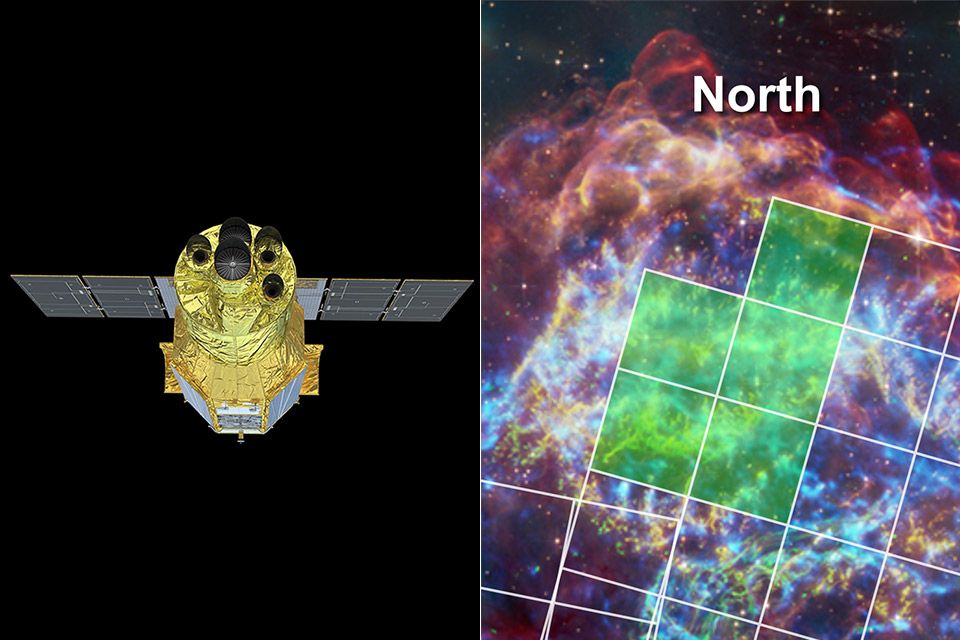
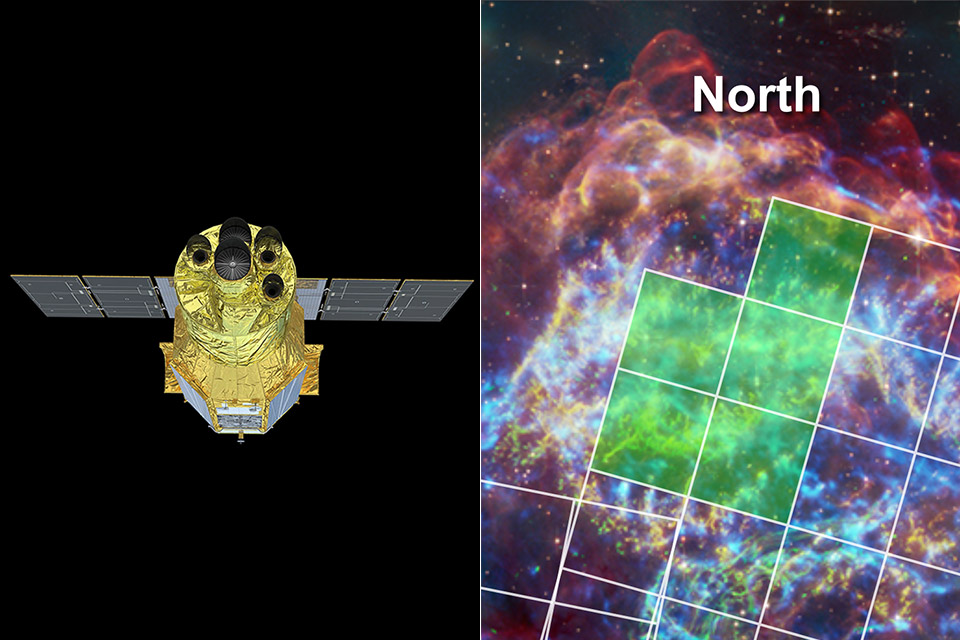
NASA and Japan’s JAXA have collaborated to investigate Cassiopeia A, also known as Cas A, a large debris field located 11,000 light years away and around 340 years old. The XRISM satellite was expressly created to examine star graveyards in greater detail than ever before, and it has just passed over some extremely interesting data revealing evidence of chlorine and potassium in the blazing wisps of Cas A.
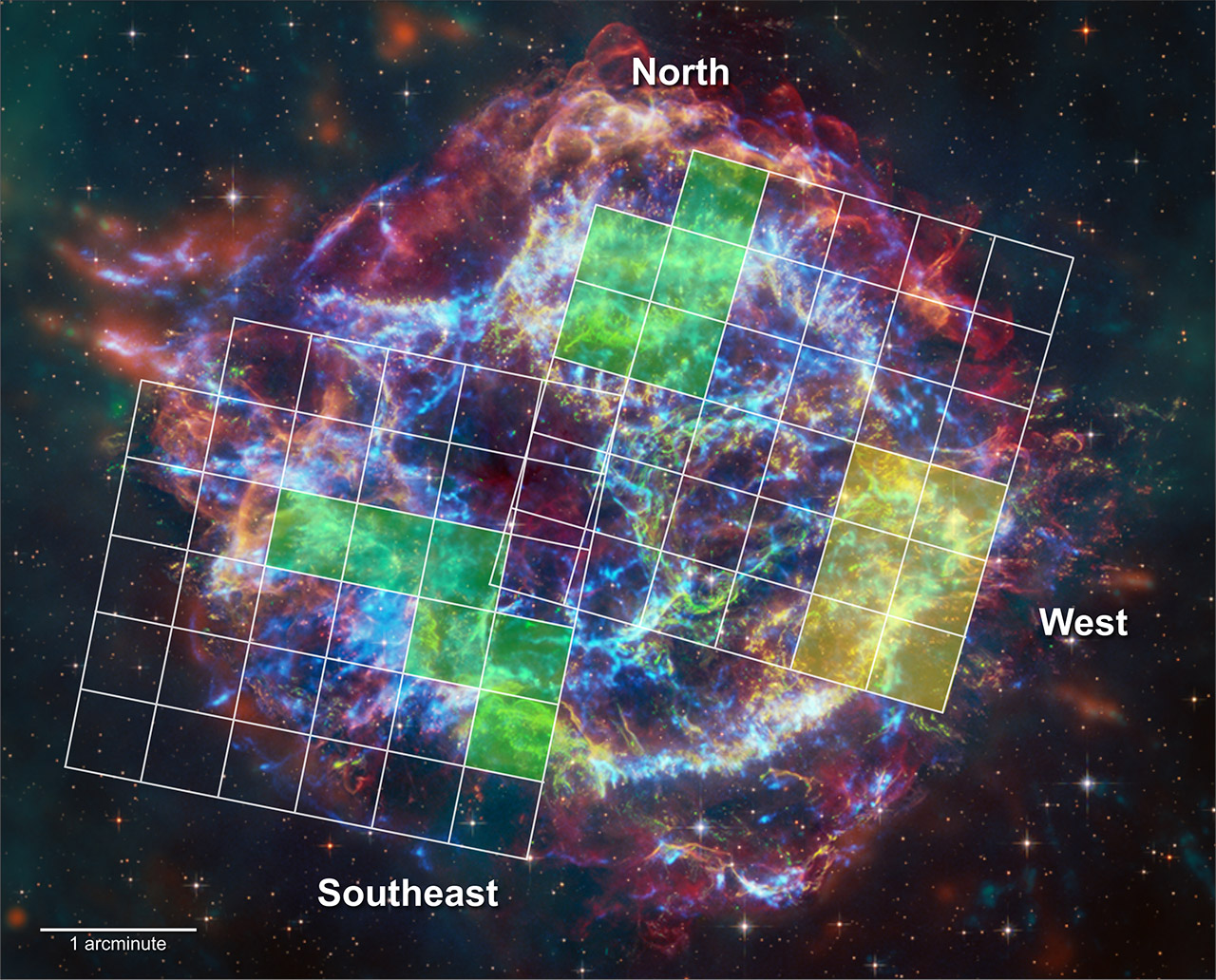
The key here is the XRISM’s Resolve instrument. It’s capable of pinpointing X-rays with great precision. In December of last year, Resolve looked at three regions of Cas A: the southeast corner, the north, and the west. Each received many hours of exposure to test if it could detect the faint signals that other telescopes could only hint at. According to the findings, chlorine emits a spectral line, similar to a fingerprint in the X-ray glow, indicating the presence of super heated gas. And then there’s potassium, which is really showing up in the southeast and north; just look at the green squares on those data maps. In the west, there is a faint yellow square that is too small to make a definitive decision just yet. All of this data far exceeds what the models projected, implying that the original star’s deep core layers were thoroughly tested before it exploded.
Stars gradually build up a stock of elements over time , sort of like peeling the layers of an onion that’s on fire. As the core heats up, hydrogen fuses into helium, which is subsequently fused into carbon, and so on down the periodic table. Neon and magnesium are next, but they require extreme conditions to begin, such as those found in a dying giant star. As the fuel runs out, the core starts to collapse under its own weight before bouncing back in a massive explosion that tears through the surrounding layers. That blast synthesizes heavy elements in a split second and launches them at speeds that disperse the remains as far as 10 light years. Cas A’s central neutron star, the collapsed core remnant, is still whirling in there, like a ghostly relic of the violence that created it.
Toshiki Sato, an astronomer at Meiji University who led the analysis, sees these results as a bridge between stellar fury and earthly origins. “Stars appear to shimmer quietly in the night sky,” he notes, “but they actively forge materials that form planets and enable life as we know it. Now, thanks to XRISM, we have a better idea of when and how stars might make crucial, yet harder-to-find, elements.”
NASA-JAXA’s XRISM Satellite Unlocks Secrets of a Star’s Final Moments
#NASAJAXAs #XRISM #Satellite #Unlocks #Secrets #Stars #Final #Moments