Up-Close Look at a Custom Portable Commodore 64 That Feels Like It Slipped Through Time
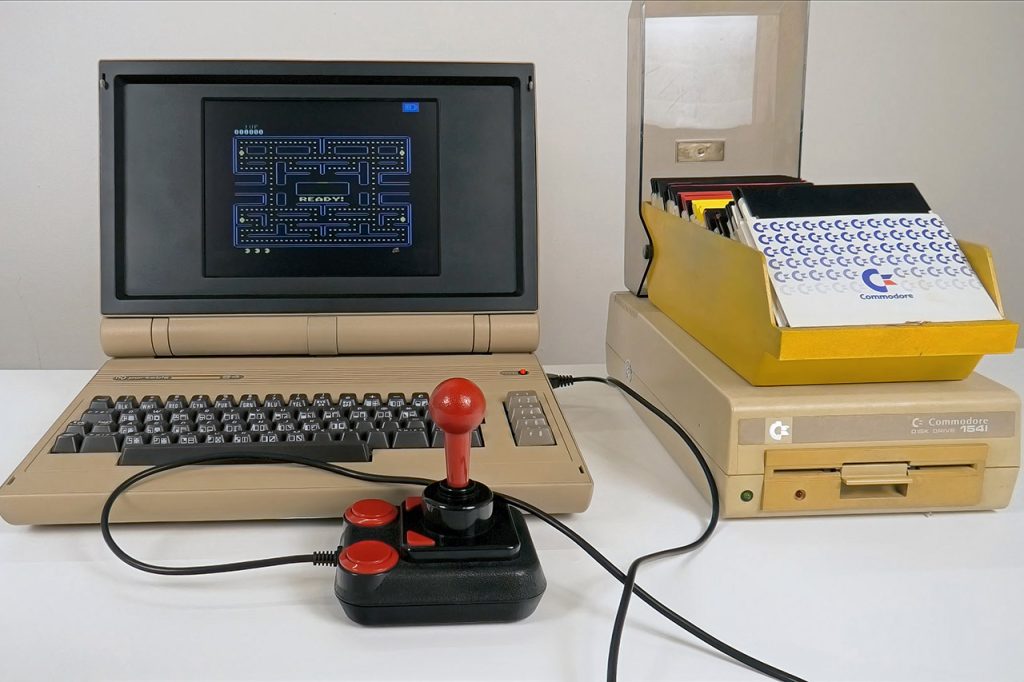
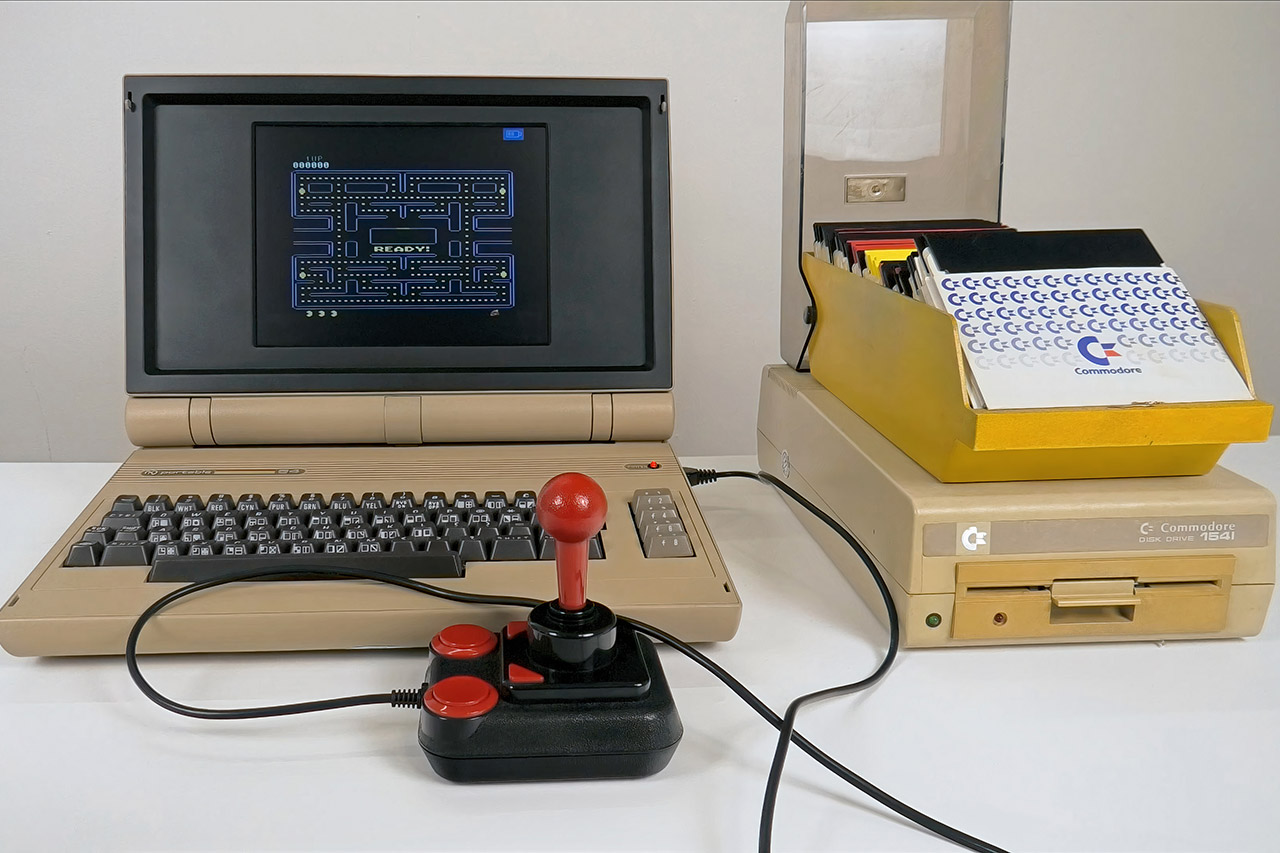
Noki spent months assembling a dream from the past in the softly lit glow of a workshop clutterd with desk lamps and CRT monitors. His creation, a fully portable Commodore 64, is not disguised as some sophisticated modern gadget, but rather a dead-set accurate clone. The computer folds open like an old briefcase from the 1980s, with a beige plastic outer casing full of sharp lines and curves that evoke recollections of ancient office equipment.
Noki basically reverse-engineered his design from the shadows of history, with the SX-64 serving as a reference point. That was a true portable version of the 64 released in 1984. But it was a rare beast; it weighed about ten pounds and featured a tiny five-inch monochrome screen housed in a large luggable case. It sold less than 12,000 units before disappearing from the market. Along with those old blueprints, Noki sifted through grainy copies of old advertisements for briefcases filled with beige boxes from companies such as Osborne and Kaypro. His design takes the SX-64’s clamshell shape and expands it slightly to make it less cramped, allowing you to sit there with the device on your lap without feeling like you’re reading a map. When closed, it is about 12 inches wide, 10 inches deep, and 2 inches thick, and weighs only around 5 pounds, making it easy to transport across a room. Plastic sheets formed in a vacuum former give it a genuine injection-molded shine.
Flip the clasp open, and the keyboard appears. The keys are machined from aluminum and stamped in the same design as the original C64 keyboard, with bold sans-serif letters in cream over grey. There are 66 keys in total, including a full-sized spacebar and a separate function row. Every single one replies with a satisfying clicky sound from authentic old-school switches. He connected them to a custom matrix board, ensuring that every press registers as crisply as it did when the Commodore 64 originally came out. Under the keys is a 7.1-inch LCD screen with 320×200 resolution, same to the original, with no phosphor flicker. The backlight filter gives the whole device a warm amber glow, similar to an antique vacuum tube terminal. Brightness and contrast adjustments are hidden behind a sliding panel on the side—just old-school potentiometers that you spin with a coin.
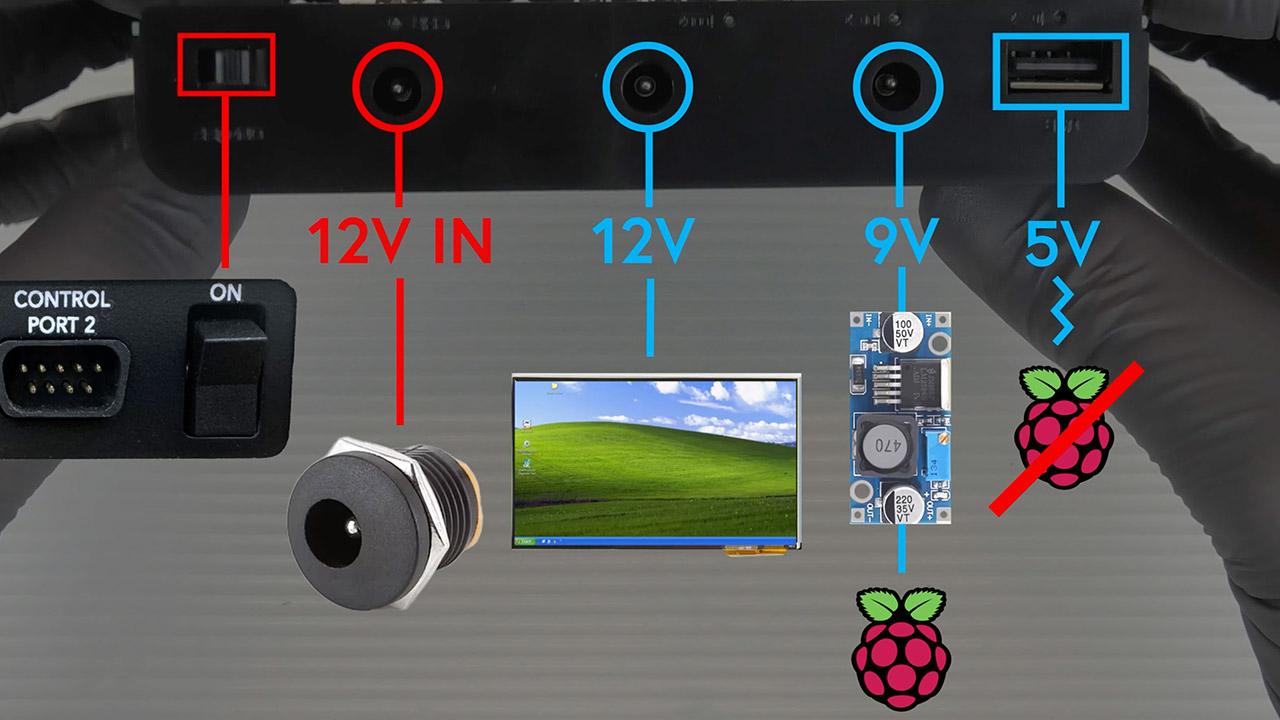
Power comes from a bank of eight AA batteries snugly packed inside the base, all connected in series to provide the straight up 5 volts that the internal electronics require. Noki even included a DC socket for wall adapters, but let’s be honest, battery life is quite impressive, lasting up to four hours of continuous typing and loading games from cassette tapes. He took the extra step of stiffening the hinge with some heavy steel pins and then put them to the test, snapping it open and shut over a thousand times with no wobble. The rear edge is lined with ports, including a traditional DIN-5 connector for that antique C64 joystick in the attic, several RCA outputs for connecting composite video and audio to the TV, and even a cassette socket wired for the real deal, a datasette drive. A small USB-C slot is stashed away under a flip-down cover for charging, allowing Noki to keep the outside looking vintage.
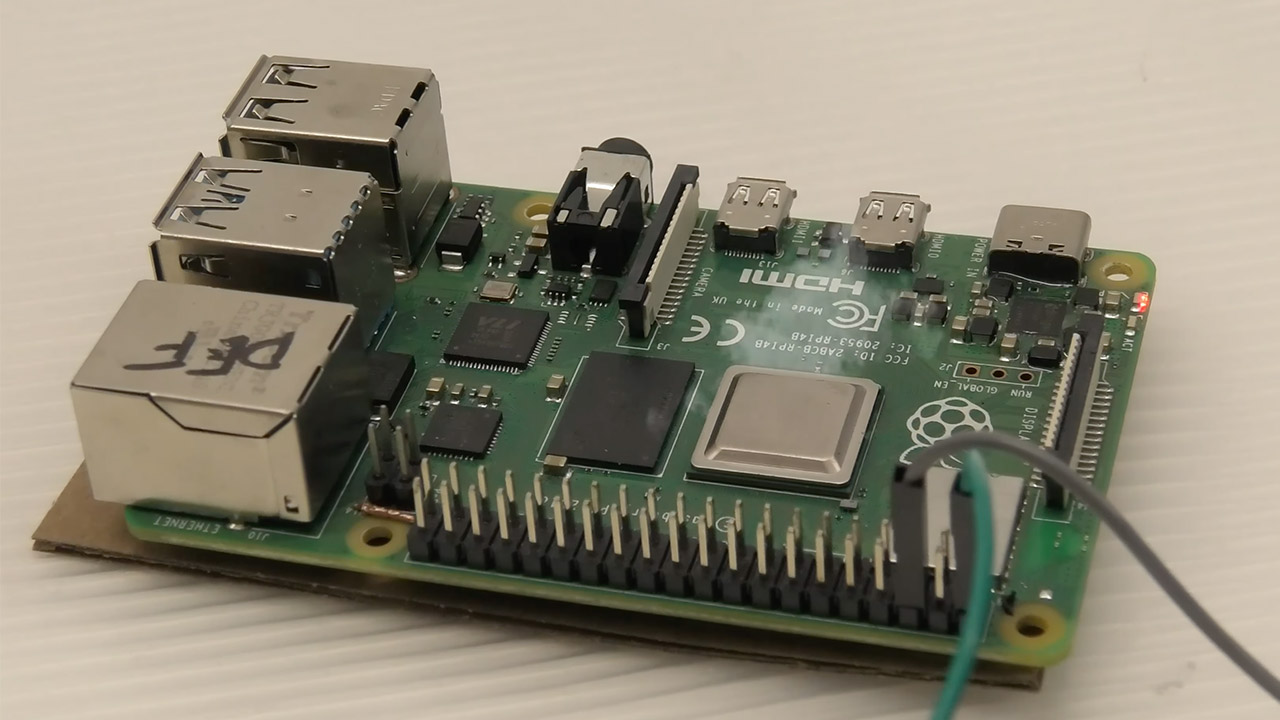
A Raspberry Pi Zero sits at the heart of this portable C64, nestled in a handmade 3D-printed cradle that replicates the shape and configuration of the original C64 motherboard. Noki experimented with the open-source VICE emulator, fine-tuning it to flawlessly recreate every oddity of the MOS 6510 processor, down to the last cycle. Games load in a flash before your eyes, from a microSD card formatted like a virtual floppy or tape, and boot times are less than 10 seconds to startup. He even slipped in a tiny little amplifier to pull the SID chip sound out of the Pi, which he then routed via a copy filter circuit made from common electronics shop components, such as capacitors and resistors. The result is melody to your ears, the same warble that made chiptunes so memorable, like the laser zaps in Defender or the pounding bass in Bubble Bobble. There is no lag, and the Pi easily manages the 1 MHz clock speed, giving lots of opportunity for future tweaking, such as adding a real 1541 disk emulator.
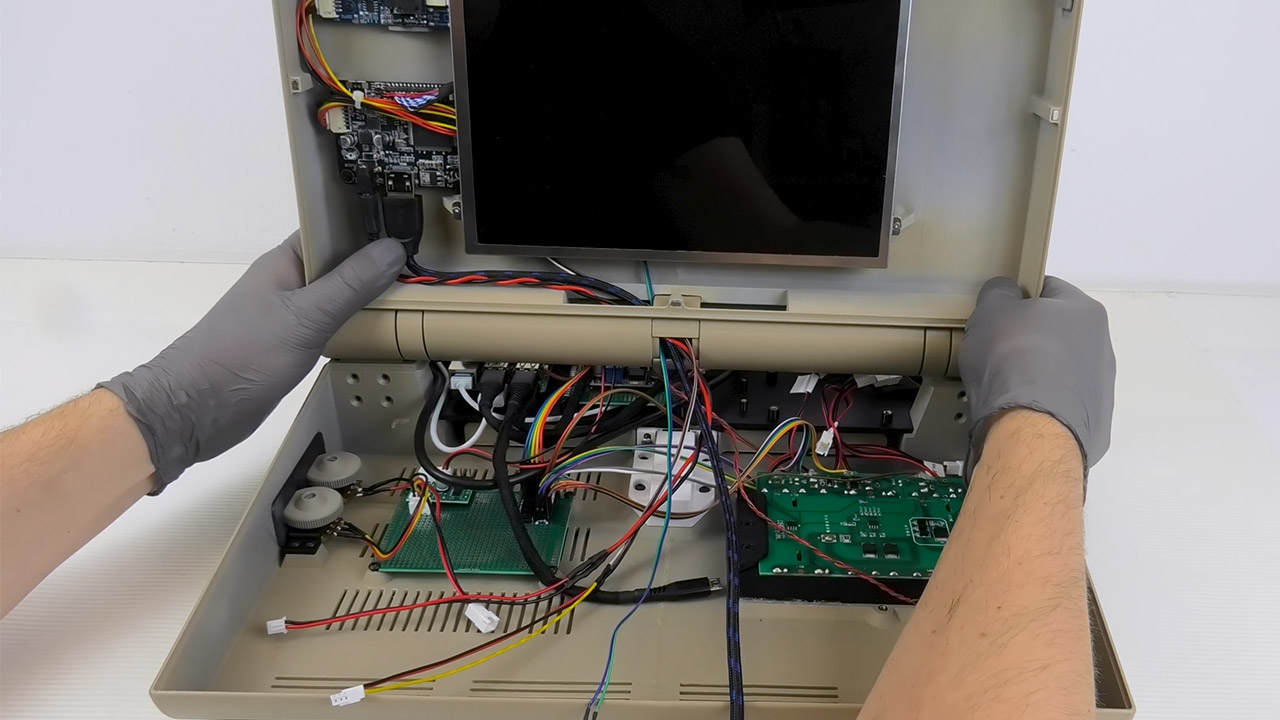
Assembling one of these beauties takes a lot of patience, beginning with some basic designs on graph paper and progressing to correctly created CAD files for the case halves. Noki made the ABS plastic shells using an old-school vacuum forming equipment over hand-carved hardwood bucks, then spent some hours cutting the edges with a bandsaw to make them smooth and accurate. He painted the shells in two stages: a primer coat followed by Krylon beige spray, which was buffed to a lovely satin sheen that covers fingerprints like a charm. The wiring is routed via some lovely braided sleeving, just like the factory harnesses from back in the day. Of course, all of the solder joints seem nice and shiny under magnification. Noki did have to undertake some extra work to figure out how to install the screen properly; with the LCD’s flex cable being recalcitrant, it took him three attempts before he got it right and the screen lay flat without putting any strain on the internal frame. Heat from the Pi was never an issue; thanks to some creative passive sinks he machined from old aluminum waste, the case remained cool even after an hour of playing Elite.
[Source]
Up-Close Look at a Custom Portable Commodore 64 That Feels Like It Slipped Through Time
#UpClose #Custom #Portable #Commodore #Feels #Slipped #Time