Hubble’s Latest View of NGC 1792 Reveals a Spiral Galaxy in Overdrive
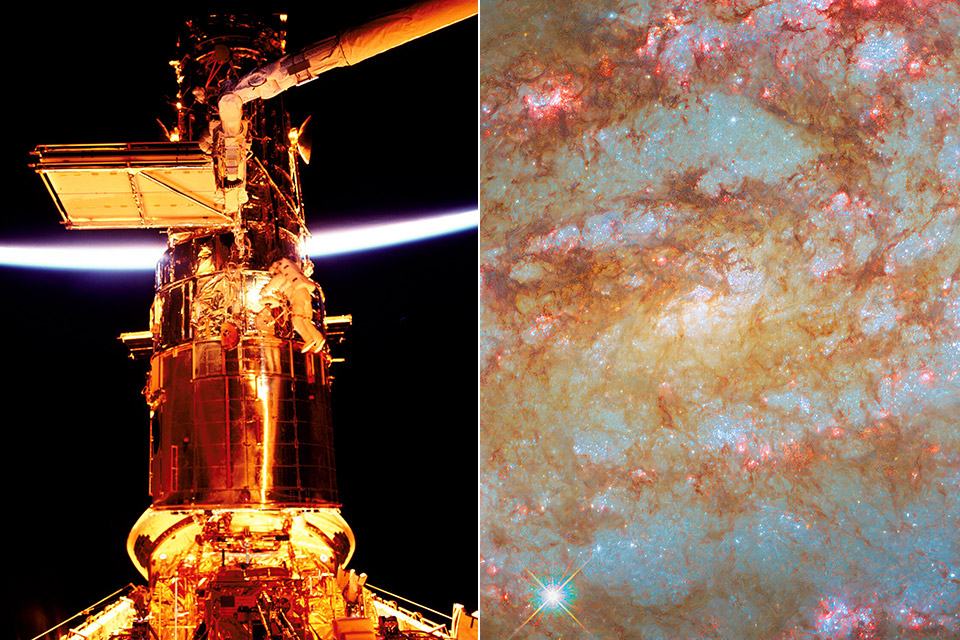
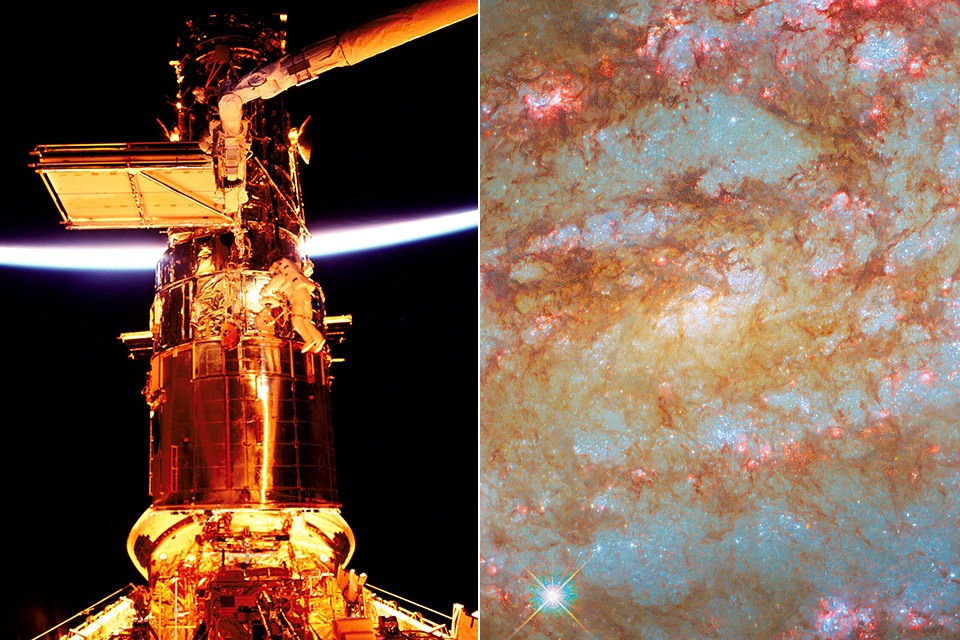
Deep in the southern constellation Columba, a spiral galaxy named NGC 1792 shines brighter than most of its size. Even after decades in orbit, NASA / ESA’s Hubble Space Telescope has delivered one of its best shots yet of this starry island.
Seen edge on, NGC 1792 stretches across about 90,000 light-years, a respectable size that’s a bit smaller than the Milky Way. Light now reaching us left this galaxy 40 million years ago, when dinosaurs were still roaming, and has been traveling 40 million light-years through space. Scottish astronomer James Dunlop first spotted it in 1826 with a small telescope from Australia, but only modern instruments can reveal what’s happening inside.
Sale

LEGO Technic NASA Apollo Lunar Roving Vehicle LRV Building Set – Craft Kits for Adults, Ages 18+ -…
- Build a realistic LEGO Technic lunar rover model – This LRV building kit for adults is packed with authentic details including seats, steering,…
- NASA model for adults – Enjoy a mindful project assembling all the details of the rover and equipment including the battery pack, heating and…
- A build for NASA fans – Remember the Apollo 17 mission with a display that features the lunar roving vehicle alongside 3 detailed equipment…
Classified as a starburst spiral, NGC 1792 is churning out new stars at a furious rate, ten times faster than the Milky Way in the same time. Huge clouds of hydrogen gas are collapsing under their own weight, igniting clusters of massive, scorching hot stars that flood their surroundings with ultraviolet light. Those young giants appear as blue patches along the arms, while red regions trace the densest pockets of ionized hydrogen, H-alpha emission, where new suns are being born right now.
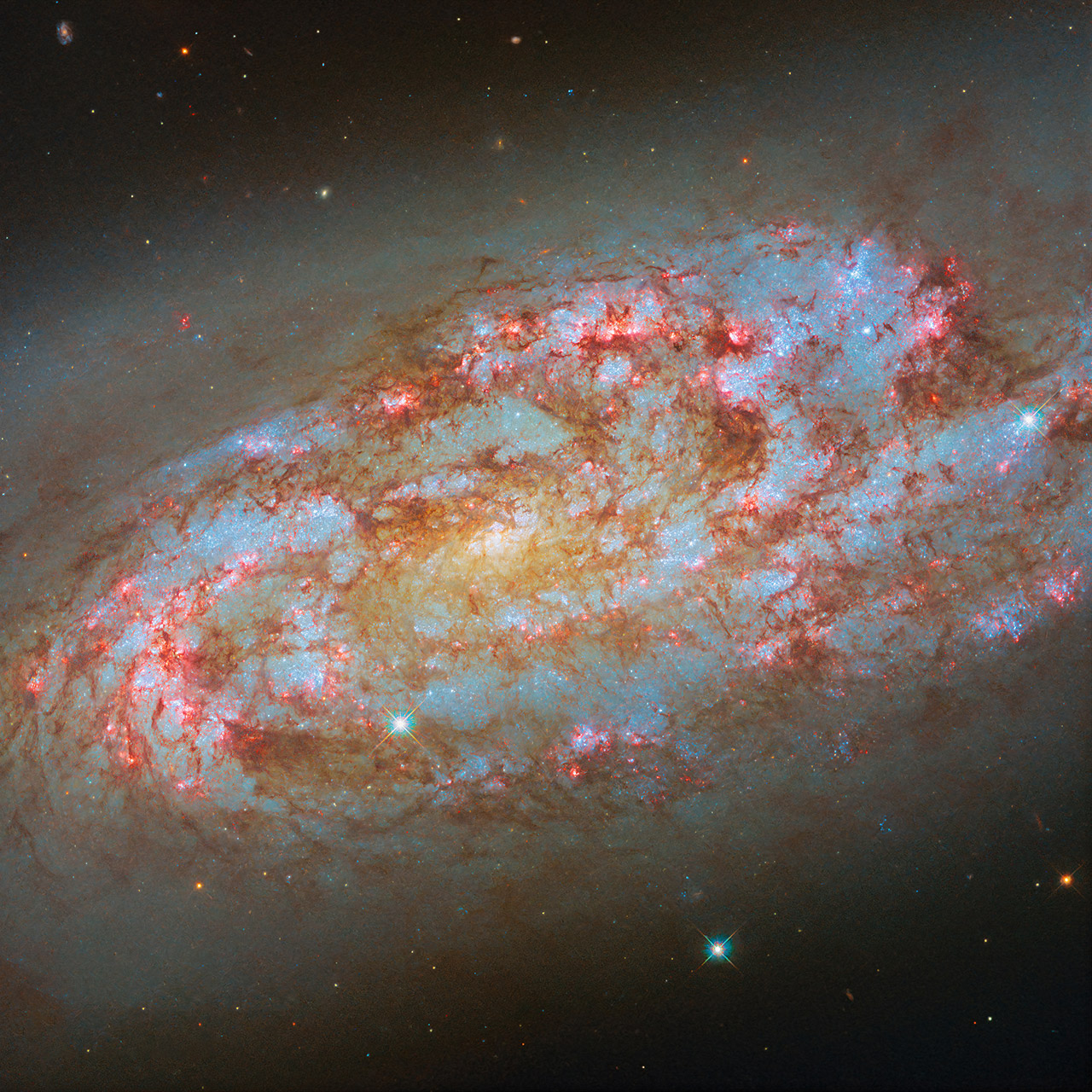
Dark lanes of dust weave through the disk like smoke trails, blocking light in some areas and creating contrast against the brighter regions. Closer to the center, populations of older, cooler stars are giving off a warm golden glow, forming a compact core that holds everything together. Unlike perfect spirals, NGC 1792 has a patchy, ragged look, with arms that break into clumps rather than smooth arcs.
A larger companion galaxy, NGC 1808, is nearby in cosmic terms, close enough for gravity to reach across the gap and tug hard on NGC 1792’s gas reserves. That invisible pull has distorted the material inside, compressing clouds on one side more than the other and triggering star formation in those compressed zones. Neutral hydrogen maps show clear signs of distortion, especially in the outer regions, which confirms a recent gravitational encounter stirred the pot without fully merging the pair.
The Hubble Telescope recaptured this latest view using its Wide Field Camera 3, combing fresh data from 2025 in with old from 2020, all captured across several wavelengths of light. This extra info allowed for a much clearer look at the delicate threads of dust and the red glow of the H-alpha which up till now would have been lost in the murk.
The odd supernova in a short-lived giant star, together with the enormous winds they generate, can eventually blast the remainder of the gas away, putting a halt to the rapid pace of star formation before every last bit of cloud is depleted. Watching this feedback loop play out in real time helps us understand why some galaxies explode while others fade into middle age. For the time being, the storm continues to rage, churning forth star after star against a backdrop of total chaos, and yet this dazzling order emerges from all of it.
Hubble’s Latest View of NGC 1792 Reveals a Spiral Galaxy in Overdrive
#Hubbles #Latest #View #NGC #Reveals #Spiral #Galaxy #Overdrive