Women’s football is booming — but are female supporters welcome? | Football
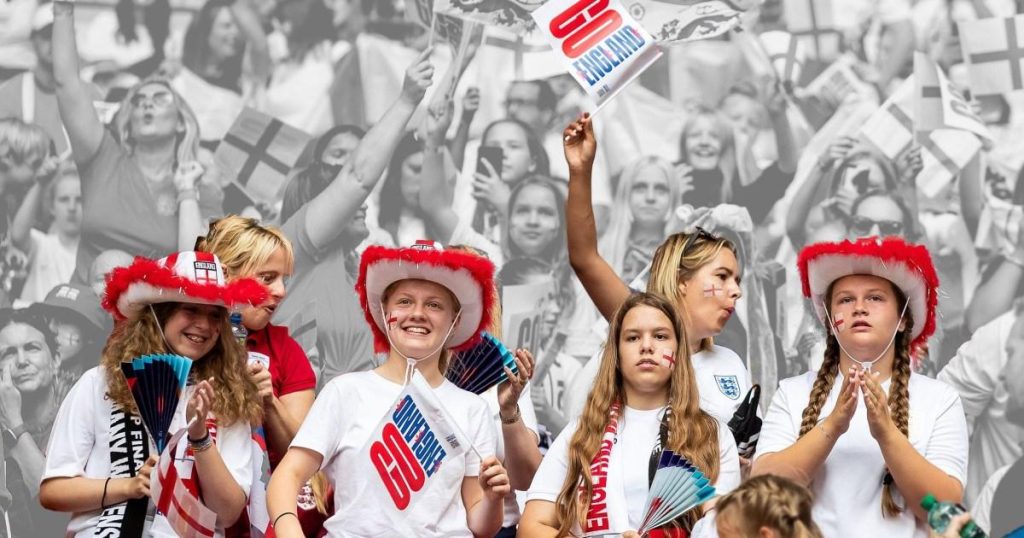
In July, 89,000 football fans packed into Jakob-Park in Basel in Switzerland, to watch the UEFA Women’s Euro 2025 final where England beat Spain on penalties.
As the Lionesses’ supporters screamed with joy as Chloe Kelly scored the winner, epic celebrations would continue for days across the UK – a sure sign of just how far women’s football has come in a short space of time.
Today, more women’s games are being shown on mainstream TV, a burgeoning fan culture is taking off on social media, and ticket sales have skyrocketed.
Case in point: attendance in the Women’s Super League (WSL) increased by 200% after England’s initial Euro win in 2022, and on an international level, the fanbase is expected to reach 800 million by 2030, with almost two thirds of those fans predicted to be female.
Women are proudly showing up and loudly celebrating the sport, but are they really being welcomed?
Get your football fix
Punchy analysis, transfer talk and more from Metro’s football experts sent straight to your inbox – sign up, it’s an open goal.
A recent survey by anti-discrimination charity Kick It Out found that over half of female supporters have experienced sexism on match days in England.
Football fan Caz May, 30, knows this statistic all too well: ‘Stewards have directed me to shopping centres, and men have touched me without consent. One time, a man in his 50s whispered into my ear that I had “nice Bristols” [slang for boobs]. I found it petrifying, but would think to myself, “I’m in a male-dominated environment, what do I expect?”’
However, one incident in 2021 led Caz to launch Her Game Too to stamp out misogyny, alongside 11 other women who also want to just enjoy the game. ‘I got involved in social media banter, and laughed at Wycombe Wanderers for losing to my team, Bristol Rovers, like the male fans were doing. But it became a horrendous sexist pile-on, with people attacking my gender, body, weight and appearance and saying stuff like “Get back in the kitchen”. I became scared by some threatening comments, but there was nowhere to get support or hold clubs accountable.’
Chloe Morgan, 35, is head of She’s a Baller, an organisation dedicated to promoting the women’s game, and has been playing football since childhood, starting with kickabouts on the street, before joining Tottenham Hotspur, Arsenal, and Crystal Palace as a goalkeeper.
Despite love for the sport and her family’s avid support for Manchester United, she never went to games growing up.

‘There’s no way in hell that my mum and dad would let me go, but I didn’t want to either,’ she says. When she eventually made it to a men’s Chelsea game in adulthood, she described the environment as ‘hostile’: ‘There were drunk people in my face shouting and swearing, which felt aggressive and unsafe, and real animosity between the sides. I’m not running to do it again.
‘You want it to be like a pantomime with cheers, boos, and drama, but there’s a fine line. In women’s football, we hold ourselves to a higher standard.’
Problems creeping into women’s games
The increasingly popular women’s matches are becoming a haven for many fans. ‘It’s so wholesome and lovely with the male fans following women’s lead,’ explains Caz. ‘You can relax without worrying about inappropriate chanting or discrimination, but I’m not saying it doesn’t happen, and as it grows, we are going to get more incidents.’
Chloe adds that this is her ‘biggest fear’ and has already seen players Khadija ‘Bunny’ Shaw and Jess Carter facing racial discrimination. ‘The very high-profile incidents show that it is creeping in,’ she says.

Football clubs taking action early is ‘paramount,’ both women agree, and believe it would mean more people will feel comfortable speaking up about any discrimination. Currently, 85% of women who experience sexism or harassment at games don’t report it.
However, women can’t do that alone, says Caz, it’s a job for everyone: ‘Men’s voices are powerful. If they hear a mate saying anything misogynistic, they could gently call them out and educate.
‘If high-profile male athletes spoke up more, there would be a ripple effect. The next generation of boys would grow up to respect women in that space, too.’
Building change
Football is a sport that has historically catered to men, with the FA even banning women’s football for 50 years until 1971, so naturally, there is a development gap. Chloe has seen crowds go from around 50 – mainly friends and family who had been ‘dragged along’ – to 38,000 a few years ago. ‘We were all terrified,’ she remembers. ‘It’s a whole different level of pressure, but it feels exciting to see.’
To help put women at the centre, WSL recently shared world-first design guidelines for elite women’s stadiums. ‘The rapid growth of the women’s game in recent years has merely highlighted the need to have those spaces designed with the needs of female athletes and fans at the heart of it,’ says Hannah Buckley, WSL’s head of safety, sustainability and infrastructure. Excitedly, plans are already in place for the first purpose-built women’s stadium at Brighton & Hove Albion.

Charlotte Read, who has consulted the FA on how to support England teams through infrastructure and transport consultancy Steer, explains why the intentional focus is needed: ‘Clubs often have their ways set for men’s teams and apply it to women, despite it being a completely different demographic.
‘The operations, infrastructure and the whole fan experience need to adapt. For instance, seating and sight lines are based on an average male height; this should be reassessed to reflect the demographics of attendees at the women’s game.’
Architect at BDP Pattern (who designed for Brighton & Hove fan zone), Lindsay Johnston, believes it will have long-term benefits. ‘Once we start building better for women, it will be a catalyst for change. In tennis, the prize money and sponsorship deals are equal between the sexes, and football could follow,’ she says.
Practical suggestions outlined by WSL include a 45% male, 45% female, and 10% gender-neutral toilets split, so women don’t miss the game due to long queues. Dedicated breastfeeding areas, more family bathrooms, baby changing facilities, and an alcohol-free area are all included in the guidelines.
Caz also has ideas: more women’s sizes in the merchandise shop and free sanitary products in the toilets, which could be especially helpful for girls attending matches with their dads. The small changes, she says, would combine to ‘build an inclusive atmosphere’.

Safety is arguably the most important consideration, and this starts with the journey. ‘Public transport and the walk to the stadium, which is usually around a mile, can be quite frightening. Providing safe and well-lit access travel routes to grounds, with clear signage, is a necessity,’ states Lindsay.
During the Men’s Euro 2020 final, police made 51 arrests, but no arrests or significant trouble were reported around the Women’s Euro 2022 final. ‘At men’s games, stewards are used as a deterrence for anti-social behaviour,’ Charlotte explains. ‘But for the women’s games, you need it to be a bit more light touch, supportive and about safeguarding.’
‘Security should look more friendly, rather than resembling a fortress that you don’t want to reach,’ Lindsay adds, and points out that everyone arriving at the same time also causes issues – but fan zones could provide another solution.‘People drift in and out, rather than trying to cram,’ she explains.
‘Change the offering, so there’s nice furniture, screens for other sports, wine on tap, healthier snacks, diverse dietary offerings like Halal, vegan, and child-friendly menus. If it’s a better experience, they’re going to spend more money, which can be reinvested into the game.’
It’s thought that nurturing the fandom could lead to economic benefits, from boosts in travel, entertainment, and retail. This year, during the first week of the Women’s Euros 2025, spending in Switzerland increased by 27% compared to the year before. As the earning power increases, the value of female fans will be taken even more seriously.
Charlotte points out that WSL fixtures are allocated broadcast time slots after all of the men’s fixed allocations, and so often happen on Sundays, which means they collide with planned engineering works and generally reduced services. ‘When people see it’s difficult, they are put off. It’s a barrier to people attending, especially whilst building the fanbase.’
Looking ahead

Now is an important chapter to create a positive future, says Charlotte: ‘The fanbase is more fragile as there is less loyalty due to it being newer, so they need to do everything they can to prioritise supporters having a fun experience. If we don’t make changes, it’s a huge missed opportunity to create those fans of the future.’
Some clubs are already leading the way, such as Arsenal, who are playing their fixtures at the Emirates, which allows players to perform for bigger crowds, and Everton, who’ve taken over Goodison Park and are investing in repurposing the stadium.
Chloe wonders if women’s football was on the path it’s on now when she was younger, whether she’d have pursued it completely, instead of juggling it alongside a law career. ‘I was essentially told there’s no career in it, and I wouldn’t make enough money to live,’ she recalls. ‘If I had grown up in this era, I would have thought about it differently.’
‘When I was a little girl, I never had an option to consider football as a potential career option, but if I had been able to see this, I would have definitely kept it up,’ Caz echoes.
‘At the Euros final, I looked around the stadium to see so many little boys and girls, with Toone or Russo on their backs. It was beautiful and proof of how far we’d come.
‘Football is a big opportunity for anyone to escape from life and get sucked into those 90 minutes. I don’t think anyone in this world should be deprived of feeling what it’s like to celebrate with your community after scoring a last-minute winner.’
Do you have a story you’d like to share? Get in touch by emailing Josie.Copson@metro.co.uk
Share your views in the comments below.
MORE: The tragic case of the Hermeler ‘suicide sisters’
MORE: Remembering the women killed over the last 12 months
MORE: I was proud of my brother – then the anti-disabled slurs started
Women’s football is booming — but are female supporters welcome? | Football
#Womens #football #booming #female #supporters #Football