The collaborative artistry behind pianist Yadi Liang
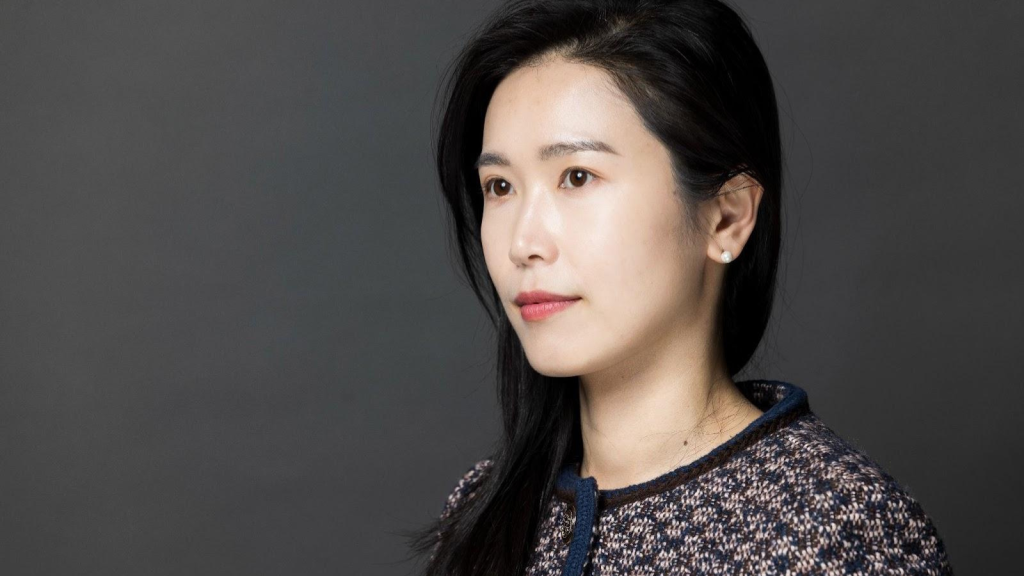
Photo courtesy of Anna Yatskevich.
Opinions expressed by Digital Journal contributors are their own.
Yadi Liang maintains one of the most demanding schedules in New York’s classical music community. As a collaborative pianist at Manhattan School of Music since 2016, she performs in rehearsals, lessons, studio classes, juries, recitals, and competitions across multiple departments, working with string, woodwind, voice, and musical theater students. Her calendar routinely includes concerto competitions, duo recitals at Carnegie Weill Hall and Merkin Hall, and high-profile performances for distinguished audiences including former UN Secretary General Ban Ki-moon and Nobel Prize-winning economists. Each summer since 2022, and previously in 2017, she returns to the Heifetz International Music Institute as a collaborative pianist, performing in festival concerts and working intensively with string players in one of the country’s most respected summer programs.
This level of activity requires not only virtuosic technique but also the specialized skills that define professional collaborative piano work: advanced sight-reading, rapid score preparation, sensitivity to diverse musical personalities, and the ability to adapt instantly to changing conditions in rehearsal and performance. Liang has built her career on mastering these skills, establishing herself as a musician whose technical command and musical flexibility make her equally effective in playing orchestral reductions, duo sonatas, and chamber music coaching.
Technical mastery across repertoire and roles
Liang’s work as a collaborative pianist requires technical versatility across different performance contexts. In concerto settings, she performs orchestral reductions that present specific challenges: dense keyboard textures, passages requiring orchestral weight and color, and the need to balance the piano against a solo instrument. Working from these arrangements, she makes decisions about dynamics and articulation to support the soloist while maintaining the harmonic and structural framework of the original score
In sonata and chamber music repertoire, where she specializes in works for string instruments, Liang applies a different set of collaborative skills. Here, the technical challenge involves matching articulation, phrasing, and tonal color to the specific characteristics of the instruments. Her years of work in string studios at Manhattan School of Music and at Heifetz have given her practical knowledge of bow mechanics, vibrato patterns, and the physical demands of string playing. This understanding allows her to anticipate where a violinist might need breathing space for a shift, or where a cellist’s bow distribution will shape the natural arc of a phrase.
“In this role, I am required not only to maintain a high level of piano playing, but also to coach students in musical interpretation and ensemble communication,” Liang explains. “I particularly enjoy exploring a wide range of repertoire from early works to contemporary pieces, with a special interest in music by women composers.”
That coaching dimension reflects one of the core competencies outlined in professional definitions of collaborative piano work: the ability to communicate musical ideas clearly and foster a supportive environment that encourages artistic growth. In lessons and rehearsals, Liang functions both as performer and guide, helping students hear their own parts within the larger musical structure while modeling how to listen, respond, and adjust in real time.
Preparation, adaptability, and performance under pressure
Professional collaborative pianists are frequently called upon with limited rehearsal time, and Liang’s career demonstrates her ability to prepare extensive repertoire quickly and perform it at a consistently high standard. Her schedule at Manhattan School of Music requires her to move between multiple studios, genres, and performance contexts in a single day, from playing a Brahms sonata in a violin lesson to contemporary repertoire for a flute studio class. Each context demands different stylistic knowledge, different technical approaches, and different ways of balancing the piano’s role within the ensemble.
At Heifetz, the intensity increases. Summer festivals compress weeks of rehearsal and performance into a short period, with collaborative pianists often preparing and performing multiple works daily. Liang’s ability to manage these demands reflects the practical skills emphasized in pedagogical literature on accompanying: thorough preparation, knowledge of standard editions, and the musical flexibility to adapt to each partner’s interpretive choices.
Her performances at venues including Carnegie Weill Hall, Merkin Hall, Gracie Mansion, and the Consulate General of the Republic of Poland demonstrate the professional contexts in which these skills operate. In December, she performs at Gracie Mansion in a program of violin and piano repertoire, continuing a performance schedule that has included collaborations with international competition participants, faculty artists, and emerging musicians across a wide range of prestigious New York stages.
Collaborative piano as coaching and partnership
Beyond the technical demands of performance, Liang’s role at Manhattan School of Music involves coaching students in the specific skills required for successful collaboration. This includes communicating musical ideas effectively, achieving appropriate interpretation with awareness of the genres and styles, making artistic choices that serve the ensemble performance, and maintaining professional standards of preparation and punctuality.
These coaching responsibilities align with the professional definition of collaborative piano work as fostering a supportive learning environment and facilitating the exchange of musical ideas. In studio classes and lessons, Liang models the kind of listening and responsiveness that chamber music requires. She demonstrates how to balance competing musical ideas, how to follow a partner’s rubato without losing structural integrity, and how to make split-second adjustments when something unexpected happens in performance.
Her specialty in string repertoire allows her to offer specific technical insights. She understands the technical demands of string playing and how they shape musical interpretation, from the relationship between bow technique and phrasing to the challenges of different articulations and ensemble blend across different musical styles and periods. This knowledge makes her coaching more precise and more practically useful to the instrumentalists she works with.
Chamber music and shared artistry
Liang describes her attraction to collaborative piano in terms of shared music-making and the particular rewards of chamber performance. Unlike solo work, where interpretive choices are made in isolation, chamber music involves ongoing negotiation between partners. Every phrase becomes a conversation, every dynamic marking must be reconsidered in relation to the other instrument’s capabilities, and every performance requires the flexibility to respond to what is happening in the moment.
This responsiveness is one of the most valued qualities in professional collaborative work. Pianists who can adapt to a partner’s choices, who can subtly lead when necessary and follow when appropriate, and who bring both musical authority and interpersonal sensitivity to rehearsals become sought-after collaborators. Liang’s consistent engagements at Manhattan School of Music, her repeated invitations to Heifetz, and her performances with competition participants and established artists all point to recognition of these qualities.
The professional reality of collaborative piano
At the center of Liang’s career is a recognition that collaborative piano is not just a supporting role but also a distinct discipline with its own standards of excellence. The technical requirements are as demanding as those in solo performance, and the additional skills of sight-reading, intense listening, stylistic versatility, and interpersonal communication make the field even more complex. Success requires not only mastering these skills individually but integrating them into a seamless professional practice that can handle the unpredictability of live performance and the intensity of academic and festival schedules.
Liang’s work at Manhattan School of Music and Heifetz International Music Institute exemplifies this integration. She prepares and performs at the highest caliber across multiple musical styles and genres, manages competing priorities and responsibilities with efficiency, and maintains the professional communication and adaptability that successful collaboration demands. Her performances at major venues, her ongoing institutional appointments, and her effectiveness as both performer and coach demonstrate how technical mastery, musical sensitivity, and professional discipline combine in the work of an established collaborative pianist.
The collaborative artistry behind pianist Yadi Liang
#collaborative #artistry #pianist #Yadi #Liang